You’ve probably seen moringa mentioned somewhere in the last year — a wellness blog, a supplement aisle, maybe a friend who suddenly started adding “green powder” to their smoothie. It gets called a superfood, a miracle tree, all the usual buzzwords.
Most of that content skips the actual question though: what is this plant, and does it do anything?
So let’s slow down for a minute. No hype, no exaggerated promises — just a straightforward look at what moringa is, what the research actually shows, and how people realistically use it.
What Is Moringa ?
Moringa oleifera is a fast-growing tree that originally comes from parts of South Asia and Africa. You might see it called the “drumstick tree,” named after its long, narrow seed pods. Nearly every part of the tree has some traditional use — leaves, pods, seeds, even the roots — but the leaves are what most people mean when they talk about moringa today.
Those leaves get dried and ground into a fine powder. Traditionally, people stirred it into food or drinks. These days, it’s more common to find it packed into capsules, mostly because that’s a lot easier to work into a normal week than measuring powder every morning.
Moringa has been part of everyday diets in the regions where it grows for a long time — we’re talking generations, not a passing trend. That history is a big part of why it’s picked up so much attention as more people look for plant-based nutrition that isn’t overly processed.
What's Actually in the Leaf
Here’s where it’s worth separating the marketing from the plant itself. Moringa leaves naturally contain a handful of plant compounds:
- Polyphenols and flavonoids, which researchers have studied for antioxidant activity
- Phenolic acids and glucosinolates, the kind of compounds you’d also find in other cruciferous and leafy greens
- Dietary fiber
- Vitamins and minerals you’d expect from any leafy green vegetable
None of that adds up to a miracle cure. It adds up to a nutrient-dense plant — which honestly puts it in the same general category as kale or spinach, just in a more concentrated, shelf-stable form.
What Does the Research Actually Say?
Moringa has genuinely drawn a lot of scientific attention. Researchers have looked at its nutritional makeup, its plant compounds, and its antioxidant behavior in lab and experimental settings. That interest is real, and it’s a fair chunk of why moringa supplements took off in the first place.
But interest isn’t the same thing as proof. A systematic review looking at moringa’s history, chemistry, and pharmacological activity found that while the lab research is genuinely interesting, clinical evidence in actual humans is still fairly limited — and the authors were clear that larger, better-designed studies are needed before anyone draws firm conclusions.
A more recent 2025 meta-analysis of randomized controlled trials, this one focused on cardiometabolic outcomes, came to a similar place: the evidence was still too uncertain to confirm consistent benefits across most of what was measured.
None of that makes moringa pointless. It just means the honest version of the story is: moringa is a nutrient-rich plant with a long traditional history and real ongoing scientific curiosity behind it, but it’s not a clinically proven treatment for anything specific. If someone tells you otherwise, that’s a sales pitch talking, not the research.
So What Can Moringa Realistically Do?
Given where the evidence actually stands, it makes sense to talk about moringa in terms of general wellness support, not disease treatment. Here’s what that looks like in practice.
Natural Energy
Feeling drained is usually tied to sleep, stress, or inconsistent eating — not one missing nutrient. Moringa has traditionally been used as a nutrient-dense plant that can support the body’s natural energy as part of a broader healthy routine. It’s not a caffeine substitute. Think of it more like adding a concentrated green to your day than taking a stimulant.
Antioxidant Support
This is probably the most studied angle. Your body naturally produces reactive molecules through everyday metabolism, and antioxidants from food can interact with some of those. Moringa’s polyphenols have specifically been studied for this. Again — lab activity is promising, but it doesn’t automatically guarantee a specific outcome once it’s inside a human body.
General Nutrition
Recent reviews describe moringa leaves as containing protein, fiber, fats, vitamins, minerals, and various plant compounds. A capsule obviously isn’t a substitute for actually eating vegetables, but it’s a reasonably convenient way to add a plant-based nutrient source on days when your diet isn’t exactly picture-perfect.
Digestive Comfort
Thanks to its fiber content, moringa is traditionally tied to digestive wellness. Like most things in this list, it works best alongside the basics — enough water, a decent diet, some movement — not as a fix on its own.
Powder or Capsules? How People Actually Use This Stuff
There are really two ways people take moringa.
Raw powder is the traditional route — dried, ground leaves you stir into a smoothie or a drink. It works fine, but two complaints come up constantly: the taste (earthy, a little bitter) and inconsistent servings if you’re not measuring carefully.
Capsules solve both of those problems, which is probably why they’ve become the more popular option. No taste to deal with, and you know exactly how much you’re getting every time. If you’re trying to build an actual daily habit rather than a one-off experiment, capsules are just the more realistic choice for most people.
Moringa vs. Other "Superfood" Greens
Fair question: Kale, Spinach and Matcha already have a foothold — why does Moringa deserve a mention too?
Honestly, it’s not that moringa blows every other green out of the water. It’s a different plant with its own compound profile, and it happens to translate really well into a dried, encapsulated format. Fresh greens like spinach are best eaten, well, fresh. Moringa’s traditional prep — drying and grinding the leaves — makes it naturally suited to standardized capsules.
So moringa isn’t trying to replace your vegetables. It’s filling a specific gap: something shelf-stable and convenient for the days when fresh greens just aren’t happening.
What to Look for in a Moringa Supplement
The market’s gotten crowded, and not every product is worth your money. A few things actually matter when you’re comparing options.
Check what’s really in it. Some products bury moringa inside a “proprietary blend” alongside a dozen other herbs, which makes it impossible to know how much moringa you’re actually getting. Look for something where moringa leaf is clearly the main ingredient, not an afterthought.
Look at how it’s made. Products manufactured in GMP-certified, FDA-registered facilities are generally a safer bet on quality control than something with no manufacturing info at all.
Be skeptical of big promises. Any moringa product claiming to cure a disease or guarantee dramatic results is overselling what the current research actually supports. That’s a red flag, not a selling point.
Look for a fair guarantee. A 60-day money-back window is fairly standard in this category and gives you enough time to actually try the thing before deciding if it’s worth keeping up.
Who Should Actually Consider This (and Who Shouldn't)
Moringa supplements tend to make sense for people who:
- Want a simple, plant-based addition to their routine
- Already eat reasonably well and just want to round things out
- Would rather take a capsule than deal with powder
- Prefer a single-ingredient product over a crowded blend
It’s not for everyone, though. Moringa isn’t appropriate for children, and if you’re pregnant, nursing, managing a medical condition, or taking prescription medication, talk to a healthcare provider before starting anything new. Supplements can interact with medications, and that’s a conversation worth having before a purchase decision.
Making It an Actual Habit
Here’s something most moringa content leaves out: the benefit isn’t really about the plant by itself, it’s about consistency. One capsule won’t do much of anything. A capsule taken daily, folded into a routine you already have, is a completely different story.
A few things that actually help:
- Attach it to something you already do. Right after brushing your teeth, with your morning coffee, alongside another supplement — habit-stacking makes it much easier to stick with.
- Give it real time. This is a nutritional supplement, not a stimulant. Weeks, not days, before you can fairly judge whether it’s doing anything for you.
- Don’t forget the basics. Sleep, hydration, and a reasonably balanced diet are still doing most of the heavy lifting. Moringa is a supporting piece, not the whole plan.
A Few Common Questions
Is it safe to take every day?
For most healthy adults, yes — it’s typically used as a daily supplement. That said, “fine for most people” isn’t the same as “fine for everyone.” Check with a healthcare provider first if you’re pregnant, nursing, managing a condition, or on medication.
How long before I notice anything?
Think weeks, not days. It’s not a stimulant, so there’s no immediate jolt to expect.
Can't I just eat the leaves instead?
Sure, if you have regular access to them. Most people outside the regions where moringa grows find a capsule far more practical.
Does it help with weight loss?
The current evidence doesn’t support that. It’s a general wellness supplement, not a fat-loss product — be wary of anyone claiming otherwise.
What's the real difference between powder and capsules?
Same base ingredient, different format. Powder needs mixing and servings can vary; capsules are pre-measured and easier to use consistently.
Bottom Line
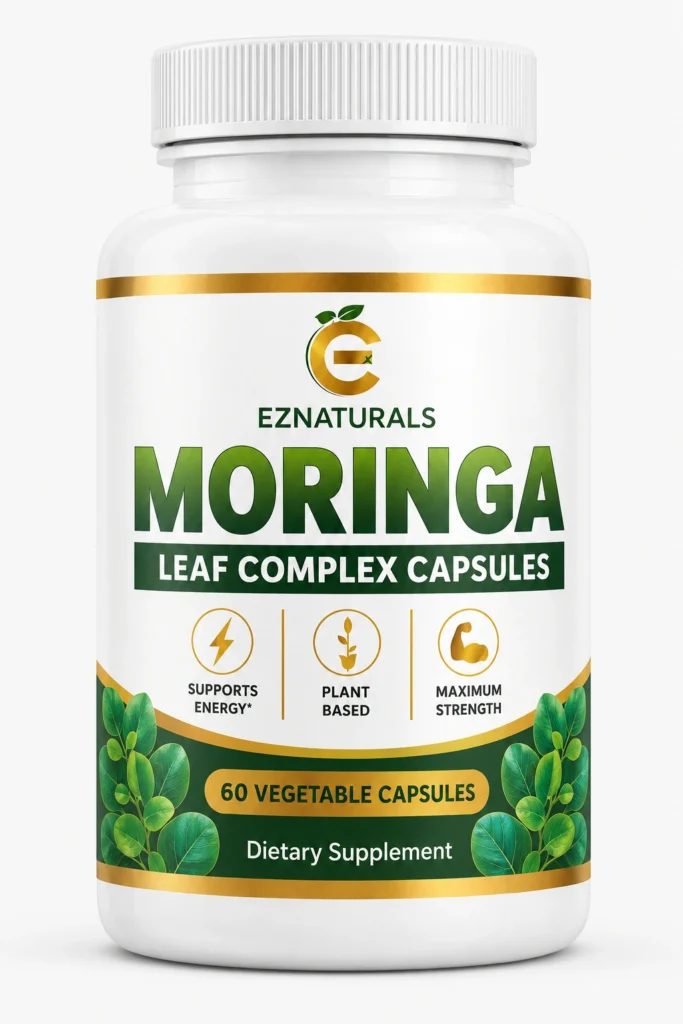
Moringa isn’t a miracle, but it isn’t nothing either. It’s a genuinely nutrient-dense plant with a long traditional history and real scientific curiosity behind it, even if the clinical evidence isn’t quite as airtight as some marketing makes it sound. Taken consistently, as part of a realistic routine, a moringa supplement like EZ Naturals Moringa can be a simple, low-effort way to support general wellness — without the taste, mess, or guesswork of raw powder.
If you’ve been thinking about giving moringa a try, a single-ingredient capsule with transparent manufacturing and a fair money-back guarantee is a reasonable place to start.
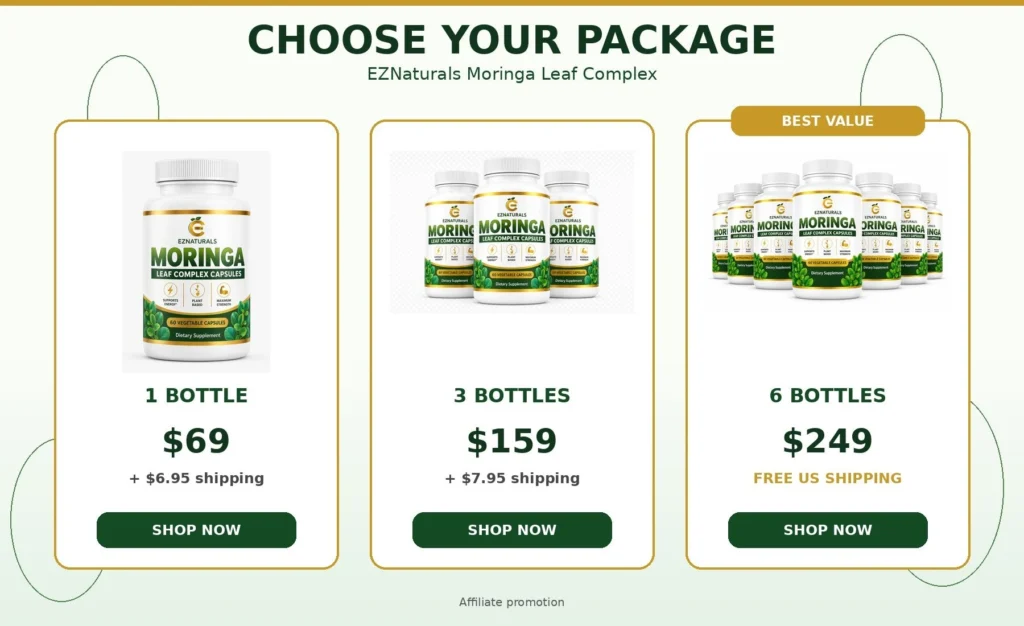
Ready to give it a shot? Check current pricing and available packages for EZ Naturals Moringa here